

 Call-an-Ambulance
Introduction
Yoga has been part of Indian wellness traditions for centuries. Today, it is also widely practised as a way to stay physically active, manage stress and develop a healthier daily routine. From people who spend long hours at a desk to older adults looking to maintain mobility, yoga offers different ways to support everyday well-being.
Unlike workouts that focus mainly on strength or endurance, yoga combines physical postures, controlled breathing and, in many practices, meditation. These elements can help improve flexibility, balance and mental relaxation when practised regularly.
Understanding the benefits of yoga can help you decide how to include this practice in your lifestyle. However, yoga is not a cure for every health problem, and its effects may vary depending on your health, the type of yoga you practise and your consistency.
What Is Yoga and Why Is It Important for Daily Health?
Yoga is a mind-body practice that combines physical movement, breathing techniques and mental focus. The physical postures are known as asanas, while pranayama refers to breathing practices and meditation helps develop awareness and concentration.
Different yoga styles suit different needs. Gentle forms focus on relaxation and mobility, while more active styles may challenge strength, stamina and balance.
For daily health, yoga can be a practical way to break up long periods of sitting, stretch stiff muscles and create time for relaxation. It can also complement other healthy habits, such as walking, balanced eating and adequate sleep.
According to the US National Center for Complementary and Integrative Health (NCCIH), research suggests that yoga may support stress management, sleep, balance and aspects of mental well-being. Evidence also indicates potential benefits for certain types of pain, including chronic lower back pain.
7 Key Benefits of Yoga Asanas for Daily Health
The benefits of yoga asanas extend beyond flexibility. Regular practice may support physical fitness, emotional well-being and everyday movement. Here are seven important ways yoga can contribute to a healthier lifestyle.
1. Improves Flexibility and Mobility
Muscle stiffness can develop when you spend hours sitting, work in one position or remain physically inactive. Gentle yoga movements take your joints and muscles through controlled ranges of motion, helping you gradually become more flexible.
Poses such as Tadasana (Mountain Pose), Marjaryasana-Bitilasana (Cat-Cow Pose) and Balasana (Child’s Pose) are commonly used to practise posture, spinal movement and gentle stretching.
Better flexibility may make routine activities, such as reaching overhead, bending down or getting up from a chair, more comfortable. However, the aim is to improve your natural range of motion, not to force your body into difficult positions.
2. Helps Manage Stress and Promote Relaxation
Work pressure, family responsibilities and a busy schedule can leave people feeling mentally exhausted. Yoga creates an opportunity to pause, focus on breathing and move without constantly thinking about daily demands.
Slow movements and controlled breathing may help reduce feelings of stress and encourage relaxation. Research reviewed by NCCIH suggests that yoga can improve perceived stress and may support positive mental well-being.
You do not need to complete a long session to get started. Even a short period of gentle stretching and mindful breathing can provide a regular break from a demanding routine.
Yoga should not replace professional care for persistent anxiety, depression or other mental health conditions. It may be used as a complementary practice alongside appropriate treatment.
3. Supports Better Balance and Coordination
Balance becomes increasingly important as people grow older, but it also matters during everyday activities such as climbing stairs, walking on uneven surfaces and changing direction.
Certain yoga postures require you to distribute your weight evenly and maintain a stable position. Vrikshasana (Tree Pose), for example, encourages concentration and balance while standing on one leg.
Practising suitable balance-focused movements may improve body awareness and coordination over time. People who are new to yoga or have difficulty balancing should practise near a wall or sturdy support rather than attempting challenging poses independently.
4. May Help Reduce Certain Types of Back Pain
Long periods of sitting, poor movement habits and muscle stiffness can contribute to discomfort in the back. Some yoga programmes combine gentle stretching, strengthening and breathing exercises that may help people with chronic lower back pain.
Research reviewed by NCCIH suggests that yoga can provide small improvements in pain and physical function for some people with chronic lower back pain. The results are not the same for everyone, and yoga may not be more effective than other suitable forms of exercise.
Gentle movements such as Cat-Cow Pose or a supported Child’s Pose may be appropriate for some individuals, but they are not suitable for every back condition. If you have recurring pain, a spinal condition or a recent injury, consult a healthcare professional before starting. Stop any movement that increases pain, numbness or tingling.
5. Encourages Better Sleep Habits
Difficulty relaxing at bedtime can make it harder to establish a consistent sleep routine. Gentle yoga and relaxation exercises may help some people wind down before sleeping. A quiet session involving comfortable stretches, slow breathing and a relaxation posture can become part of a regular evening routine. The purpose is to reduce stimulation rather than perform an intense workout just before bed.
Research suggests that yoga may improve sleep quality in some groups, although outcomes depend on the population studied and the type of practice used. Yoga is not a substitute for medical assessment if sleep problems continue for weeks, affect daily functioning or occur alongside symptoms such as loud snoring and excessive daytime sleepiness.
6. Builds Body Awareness and Supports Posture
Everyday habits can influence how we hold our bodies. Looking down at a phone, leaning towards a computer or sitting for long periods may contribute to discomfort and poor movement habits.
Yoga encourages awareness of body alignment, weight distribution and movement. Standing postures such as Tadasana can help you practise keeping your feet grounded, shoulders relaxed and spine in a comfortable position.
These skills may help you notice unnecessary tension during routine activities. However, yoga does not automatically correct every postural problem, and persistent pain or movement limitations may require an individual assessment.
7. Complements an Active Lifestyle
Some yoga styles involve sustained poses, weight-bearing movements and repeated transitions that challenge muscular endurance and control. Others are gentler and focus more on mobility and relaxation. The physical demands depend on the style and intensity of the session. Yoga can complement walking, cycling, strength training and other activities, helping create a more varied fitness routine.
Research also suggests that yoga programmes may support healthier lifestyle habits in some people. Nevertheless, yoga alone may not provide enough aerobic activity or strength training to meet every fitness need. For overall health, combine an appropriate yoga routine with other forms of physical activity suited to your age and abilities.
Common Yoga Asanas and Their Potential Benefits
You do not need to master advanced postures to begin practising yoga. Basic asanas help develop balance, flexibility, body awareness and relaxation. Learning the correct technique can help you practise comfortably and make yoga a regular part of your routine.
1. Tadasana (Mountain Pose)
Stand upright with your feet hip-width apart or comfortably together. Distribute your weight evenly across both feet, keep your spine straight, relax your shoulders and hold your chin parallel to the floor. Breathe normally while maintaining the position for 30–60 seconds.
Tadasana improves awareness of standing posture and body alignment. It helps develop balance and teaches you to distribute your body weight evenly, providing a foundation for other standing yoga poses.
2. Vrikshasana (Tree Pose)
Stand straight and shift your weight onto one foot. Place the sole of your other foot against your inner calf or thigh, avoiding the knee joint. Bring your palms together at chest level and focus on a fixed point to maintain balance. Hold for 15–30 seconds on each side, using a wall for support if necessary.
Vrikshasana develops balance, coordination and concentration. It strengthens the muscles that stabilise the standing leg and ankles while encouraging an upright posture.
3. Marjaryasana-Bitilasana (Cat-Cow Pose)
Start on your hands and knees, with your wrists aligned beneath your shoulders and your knees beneath your hips. Inhale as you gently lower your abdomen and lift your chest. Exhale as you round your back and bring your chin towards your chest. Repeat slowly for 8–10 cycles while coordinating each movement with your breathing.
Cat-Cow Pose improves spinal mobility and helps you move your back in a controlled manner. It can ease mild stiffness associated with prolonged sitting and improve coordination between breathing and movement.
4. Balasana (Child’s Pose)
Kneel on the floor with your big toes together and knees comfortably positioned. Slowly lower your hips towards your heels and extend your arms forward, resting your forehead on the mat or a cushion. Breathe naturally and remain in the pose for 30–60 seconds, provided the position feels comfortable.
Balasana stretches the back, hips and thighs while providing a resting position between more active movements. It encourages relaxation and gives you an opportunity to slow your breathing and release muscular tension.
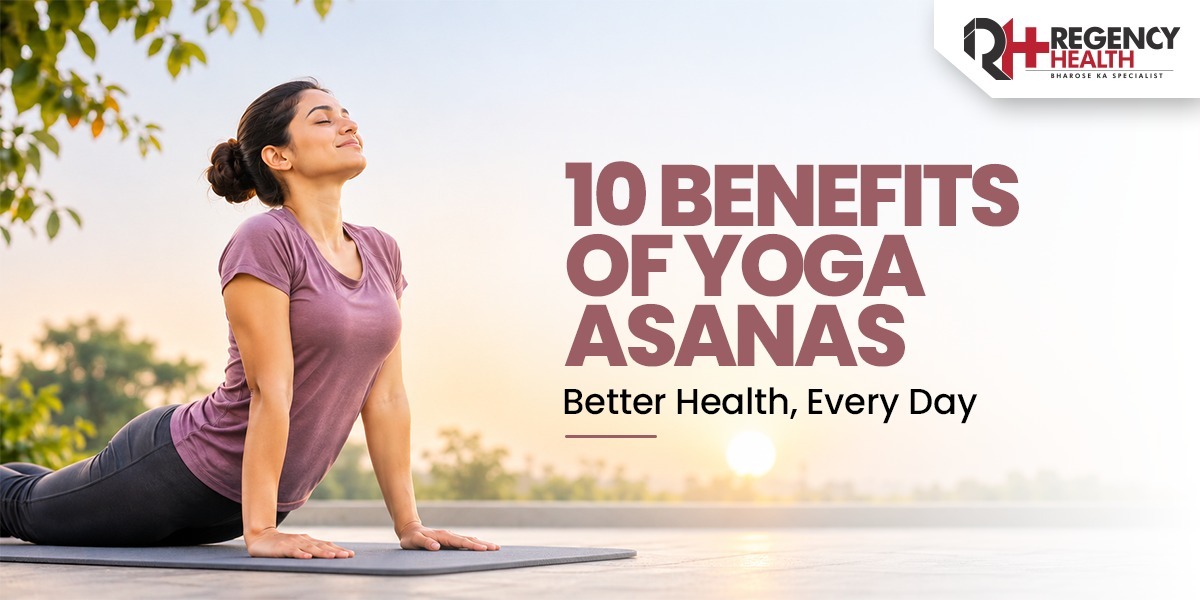
5. Bhujangasana (Cobra Pose)
Lie on your stomach with your legs extended and the tops of your feet on the floor. Place your palms beside your lower ribs and keep your elbows close to your body. Inhale and gently lift your head and chest, using your back muscles and light support from your hands. Keep your pelvis grounded and shoulders relaxed, then lower slowly.
Bhujangasana strengthens the back muscles when practised appropriately and improves the movement of the spine into extension. It also engages the upper body and encourages awareness of chest and shoulder positioning.
6. Shavasana (Corpse Pose)
Lie on your back with your legs comfortably apart and arms resting beside your body. Keep your palms facing upward if comfortable, support your head or knees with cushions if needed and allow your muscles to relax. Breathe naturally for 5–10 minutes before gently moving your fingers and toes and sitting up slowly.
Shavasana helps calm the body after physical activity and encourages relaxation. It allows you to focus on your breathing, recognise areas of muscle tension and finish your yoga session in a restful state.
Safety tip: Practise each pose within your comfortable range of movement and avoid forcing stretches. Stop if you experience pain, dizziness or unusual discomfort. If you have an injury or a medical condition affecting movement, consult a healthcare professional before starting a yoga routine.
These are general examples, not a personalised exercise prescription. Some poses may need to be modified or avoided depending on pregnancy, joint problems, back conditions or other health concerns.
Yoga and Meditation: How Do They Work Together?
Physical movement is only one part of yoga. Many routines also include breathing exercises and meditation, which encourage attention to the present moment.
The yoga meditation benefits may include improved relaxation, greater awareness of stress and better emotional self-regulation. Taking a few minutes to observe your breathing without trying to force it can also help you recognise when you are tense or distracted.
A simple routine could involve gentle stretches, comfortable breathing and a short period of seated meditation. You can gradually increase the duration as you become more comfortable.
Avoid forceful breathing techniques or prolonged breath-holding unless you have been appropriately trained and they are suitable for your health. If meditation causes significant distress or discomfort, stop and seek suitable guidance.
How to Start a Daily Yoga Routine
Consistency matters more than attempting difficult poses at the beginning. A manageable routine can help you develop the habit without making exercise feel overwhelming.
Here is an example of a short beginner-friendly session:
| Duration | Activity | Purpose |
|---|---|---|
| 2 minutes | Sit comfortably and breathe naturally. | Settle into the practice |
| 3 minutes | Gentle shoulder, neck and body movements within a comfortable range. | Prepare for movement |
| 5 minutes | Practise suitable basic asanas, such as Mountain Pose and supported Cat-Cow movements. | Work on mobility and balance |
| 3 minutes | Perform comfortable stretches suited to your ability. | Encourage controlled movement |
| 2 minutes | Rest in a comfortable position. | Finish with relaxation |
This 15-minute example is a starting point, not a required daily target. You can adjust it to your comfort, schedule and physical abilities.
For a sustainable routine:
- Choose a quiet, well-ventilated place with enough room to move safely.
- Wear comfortable clothing and use a stable, non-slip surface.
- Start with beginner-level movements and learn correct technique from a qualified instructor.
- Breathe normally and avoid forcing a stretch or holding a difficult position.
- Increase the duration and difficulty gradually as your comfort improves.
- Pair yoga with regular physical activity, balanced nutrition and sufficient sleep.
Safety Precautions Before Practising Yoga
Yoga is generally considered safe for healthy people when practised appropriately. However, incorrect technique, excessive stretching and unsuitable poses can cause injuries, particularly around the knees, lower legs, back and neck.
Keep these precautions in mind:
- During pregnancy: Seek advice from your healthcare professional and choose pregnancy-appropriate modifications.
- With existing medical conditions: Speak to your doctor or physiotherapist if you have heart disease, uncontrolled high blood pressure, glaucoma, significant joint problems or a spinal condition.
- After surgery or an injury: Get clearance before resuming exercise and follow any prescribed restrictions.
- For older adults or people with balance difficulties: Use a chair, wall or other appropriate support and consider supervised sessions.
- When pain occurs: Stop if a pose causes sharp pain, dizziness, numbness, unusual breathlessness or other concerning symptoms.
Avoid beginning with advanced inversions, extreme flexibility exercises or forceful breathing practices. Hot yoga may also increase the risk of overheating and dehydration.
Most importantly, do not use yoga to delay medical assessment for persistent pain, breathing difficulties or other unexplained symptoms. It is best viewed as a supportive wellness practice rather than a replacement for evidence-based medical care.
Conclusion
Yoga can be a practical addition to everyday life, whether your goal is to move more comfortably, manage stress, improve balance or create a relaxing bedtime routine. The most useful benefits of yoga usually come from choosing suitable movements and practising them consistently rather than pushing your body into advanced poses.
Start at a comfortable level, pay attention to your body’s responses and make changes when necessary. If you have an existing health condition or persistent symptoms, seek professional advice before beginning a new exercise routine.
For concerns that require medical attention, consult qualified healthcare professionals rather than relying on yoga alone. If you are looking for guidance on your overall health, the specialists at Regency Hospitals can help you understand your healthcare needs and available treatment options. As a trusted option for people seeking the Best hospital in Kanpur, Regency Hospitals encourages informed health decisions supported by appropriate medical care.
Frequently Asked Questions
1. What are the main benefits of yoga?
Yoga may help improve flexibility, balance, physical function, stress management and sleep quality. It may also provide modest relief for certain types of chronic pain. Results vary depending on the individual, the yoga style and consistency of practice.
2. Which yoga asanas are best for beginners?
Mountain Pose, supported Cat-Cow movements, a comfortable Child’s Pose and Corpse Pose are common starting points. Choose movements that suit your ability and learn proper technique from a qualified instructor, particularly if you have existing health concerns.
3. Is it good to do yoga every day?
Many healthy adults can practise gentle yoga daily if the routine suits their fitness level. Begin with short sessions, allow time for recovery when needed and avoid repeating movements that cause discomfort. Your routine should be adjusted to your health and abilities.
4. Can yoga help reduce stress and improve sleep?
Yoga combines movement, breathing and relaxation, which may help reduce perceived stress and support sleep quality in some people. It can complement healthy sleep habits and professional care but should not replace treatment for persistent sleep or mental health problems.
5. What is the best time to practise yoga?
The best time is the time you can follow consistently and comfortably. Some people prefer mornings to begin the day with movement, while others choose gentle yoga in the evening to relax. Avoid strenuous sessions immediately before bedtime if they make you feel more alert.
Read More:
- Simple Steps Youngsters Can Take To Lead A Healthy And Fulfilling Life
- 10 Ways to Improve Your Heart Health
- How to Keep Your Mind Calm in a Busy and Stressful Life
- Top 10 Health Tips to Transform Your Life